Adult sleep care · Physician coordination · Custom appliances
Quick AnswerA custom oral appliance may help selected adults with obstructive sleep apnea by holding the lower jaw forward during sleep. At Ethos Advanced Dental Care in Temecula, we assess dental suitability and discuss next steps alongside physician diagnosis and follow-up. Snoring alone does not show whether sleep apnea is present or controlled.
Saturday appointments · 8 a.m. to 2 p.m.

A custom dental appliance intended to help keep the airway open during sleep.
| Question | Quick facts |
|---|---|
| What is it? | A custom dental appliance intended to help keep the airway open during sleep. |
| Who is it for? | Selected adults after medical diagnosis and a dental suitability assessment. |
| How long is the visit? | Evaluation and fitting times depend on records, dental health, and the device. |
| How many visits? | Several visits for assessment, delivery, adjustment, and ongoing review. |
| What is recovery like? | An adjustment period is common; jaw symptoms or bite changes need review. |
| How long does it last? | Continued use and follow-up are needed; it is not a permanent cure. |
| What does it cost? | Device, adjustment, and follow-up costs are explained before treatment. |
| What about insurance? | Medical and dental benefits differ; coverage must be checked individually. |
Your questions
Loud snoring can occur with or without obstructive sleep apnea. Witnessed breathing pauses, gasping during sleep, unrefreshing sleep, morning headaches, and excessive daytime sleepiness are reasons to discuss an evaluation with a physician. A partner’s observations can help explain what is happening, but an app or a recording cannot establish a diagnosis. A physician or sleep specialist determines whether testing is needed and interprets the results.
Our dental role includes identifying concerns and assessing whether the teeth, gums, jaw joints, and bite could support an appliance. An ordinary nightguard is not a diagnostic test or a substitute for prescribed apnea treatment. Share existing sleep-study results and your current treatment plan when scheduling. Our general dentistry examinations also help identify dental conditions that need attention before appliance care. If you are too sleepy to drive safely, do not drive; seek medical advice promptly.
Understanding your options
Oral appliance therapy may be considered for adults with obstructive sleep apnea who prefer an alternative or cannot tolerate positive airway pressure, depending on medical recommendations and individual circumstances. Severity matters, but so do symptoms, other health conditions, treatment response, and the ability to use the device consistently. Positive airway pressure remains an important treatment and may provide more reliable control for some patients.
Dental suitability is a separate part of the decision. We assess tooth support, active disease, jaw movement, and comfort rather than choosing a device from the sleep-study result alone. If gum disease treatment or other dental care is needed, it may affect the sequence. Do not stop or change prescribed CPAP or another medical treatment while waiting for a dental appointment. Adults and growing teens have different evaluation needs; this appliance pathway is described for adults.
Care considerations
A commonly used custom appliance holds the lower jaw in a carefully selected forward position while you sleep. Dental records guide fabrication, and the delivery appointment includes checks of fit, retention, comfort, and how to insert and remove the device. It should be adjusted according to a planned schedule rather than advanced as far as possible on your own.
Follow-up addresses symptoms and dental effects, but symptom improvement alone cannot confirm adequate control of apnea. Your sleep clinician may arrange follow-up sleep testing with the appliance in place. Tell the team if you develop jaw pain, tooth soreness, dry mouth, excess saliva, or a lasting change in how your teeth meet. Our dental technology information explains tools that may be used for dental records; those records serve a different purpose from a medical sleep study. Additional treatment or a different approach may be needed if benefit is inadequate.
Looking ahead
Bring the appliance to recommended dental reviews so its condition, fit, and effect on your teeth and bite can be assessed. Follow the cleaning instructions for its specific material, allow it to dry or store it as directed, and protect it from heat, pets, and accidental damage. Do not reshape, heat, glue, or tighten a broken device at home.
Tell both dental and medical clinicians about major weight changes, recurrent sleepiness, a return of snoring, or changes in health and medication. A new filling, crown, missing tooth, or orthodontic movement can alter the fit. Ask before wearing a device that no longer seats properly. Regular reviews remain important even when sleep feels better. You can learn about the team on our dentists page and discuss appointment planning and financing options before starting. Neither consistent use nor a comfortable fit guarantees that apnea is fully controlled.
What to expect at Ethos
We start with your concerns and an assessment, then explain the appropriate next steps. The details depend on the service and your individual needs.
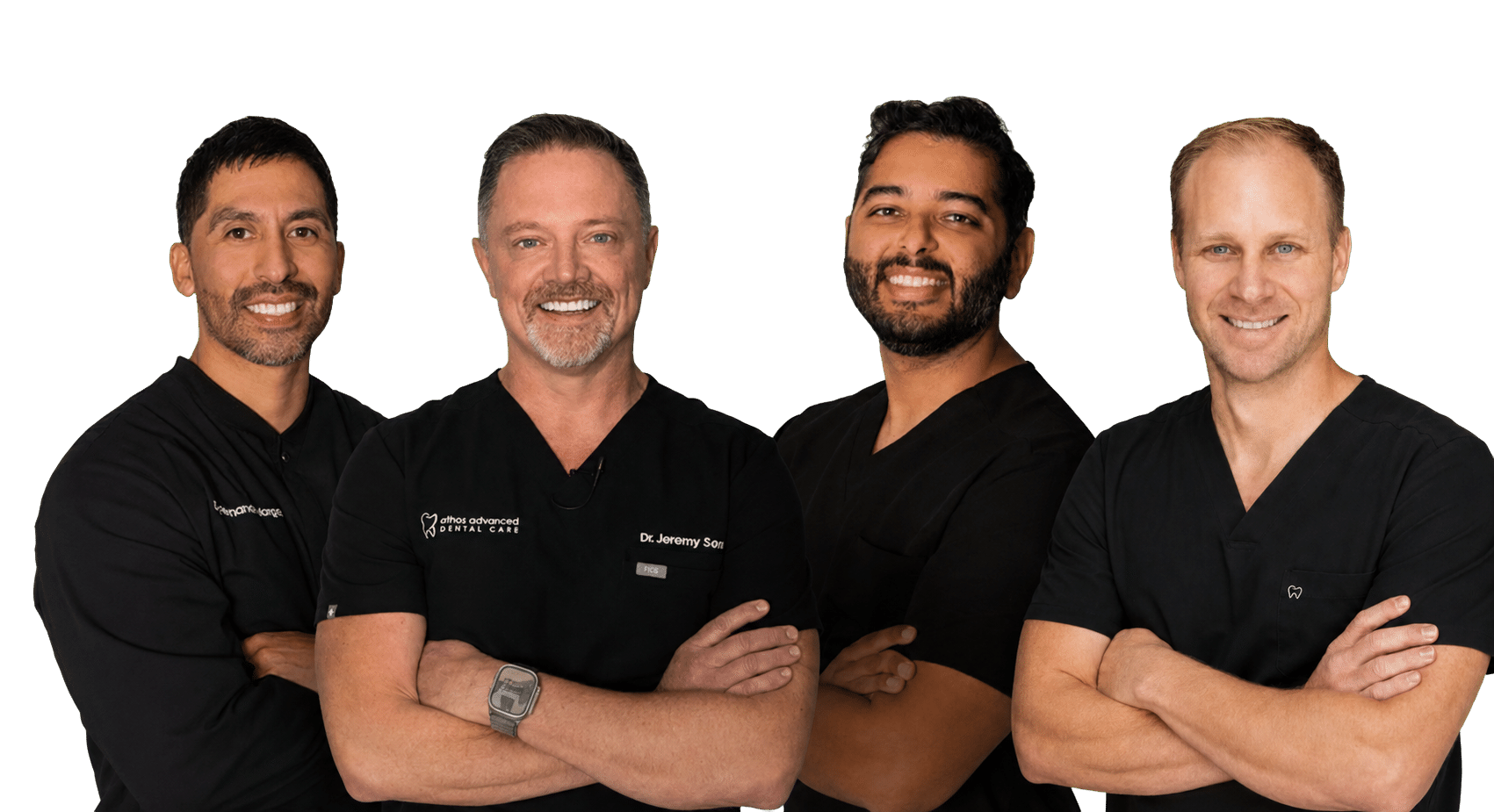
Ethos Advanced Dental Care, formerly Nash Dental Care, has served the Temecula Valley for more than 35 years. Our team includes Dr. Jeremy Sewell DMD, Dr. Fernando Vargas DDS, Dr. Karan Oza DMD, and Dr. Jeffrey Anderson DDS.
Learn more about our Temecula dentists. Bring your health history, medication information, and questions so we can discuss your situation and the care being considered.
Compare the approaches
These devices have different purposes. The medical diagnosis and treatment goals guide which option is appropriate; they should not be exchanged without professional advice.
| Option | Purpose or approach | What to consider |
|---|---|---|
| Custom apnea appliance | Positions the jaw to help maintain the airway during sleep. | Needs dental suitability, planned adjustment, and medical verification of benefit. |
| Positive airway pressure | Uses prescribed air pressure to help prevent airway obstruction. | Managed through medical sleep care; do not discontinue it independently. |
| Grinding nightguard | Primarily separates and protects teeth from grinding-related wear. | Does not replace a device prescribed to treat obstructive sleep apnea. |
Cost & payment
The quote depends on the appliance, dental records, fitting, adjustment visits, and ongoing care included. Medical sleep evaluation and testing may be billed separately. Ask which services are included and whether benefits would be considered through medical or dental insurance. Verification of a benefit is not a promise of payment; we explain the proposed dental costs before you commit.
We quote recommended treatment before it begins. Ask what the plan includes, whether care is staged, and which follow-up visits are anticipated. If the findings change, we explain the revised recommendation and cost before additional treatment.
Patients without dental insurance can ask about the Ethos Cares in-house dental plan. Review current membership details and how they apply to your proposed care before choosing a payment approach.
We offer financing through CareCredit and Sunbit. Review eligibility and the specific payment terms, including any interest or fees. The availability of financing does not guarantee approval or a particular rate.
We accept most PPO plans. We do not accept Delta Dental PPO, MetLife PPO, United Concordia, or Tricare. Review our insurance information and contact us with your plan details. Benefits for any particular service depend on your plan and are not guaranteed.
Serving the Temecula Valley
Yes. We see patients from Temecula and the surrounding communities of Murrieta, Menifee, Wildomar, Lake Elsinore, Winchester, Canyon Lake, Fallbrook, French Valley, and Sun City.
Our address is 41715 Winchester Rd, Suite 101, Temecula, CA 92590. We see patients ages 12 and up. Saturday hours are 8 a.m. to 2 p.m. Tell us about your concern when scheduling so we can discuss the appropriate appointment and any preparation.

Common questions
These answers cover common questions. Your examination and discussion with our team determine the recommendation for your care.
Dental findings can prompt screening questions, but they cannot establish obstructive sleep apnea. Diagnosis belongs with a physician or sleep specialist who evaluates symptoms and appropriate testing. A dental examination then helps determine whether an oral appliance is feasible. Tooth wear, snoring, or a narrow-looking airway alone does not establish the condition or its severity.
It may be an alternative for selected adults, but the decision depends on your diagnosis, medical recommendations, and verified treatment response. Some people still need CPAP or a combined approach. Keep using prescribed therapy unless your sleep clinician advises a change. An appliance that reduces snoring may still leave clinically important breathing problems untreated.
A store-bought device is not equivalent to a custom, professionally monitored appliance prescribed for diagnosed obstructive sleep apnea. Fit, adjustment, tooth support, and follow-up matter. Self-treatment can delay assessment of an underlying sleep disorder. Bring any device you already use to your evaluation and describe its effects and any jaw or tooth discomfort.
Yes. Tooth movement or changes in how the teeth meet can develop, and some people notice jaw discomfort or altered salivation. Dental follow-up checks these effects as well as the appliance itself. Report a bite change that persists after removing the device. Do not force a device that has stopped fitting or make unsupervised adjustments to address discomfort.
Symptoms, a partner’s observations, and consistent use provide useful information, but they are not enough to verify apnea control. Your sleep clinician may recommend testing while you wear the appliance. Results can guide adjustment or a different treatment plan. Follow-up remains necessary if symptoms return or your health changes, even after an initially helpful response.
Yes. Custom oral appliances are portable, but travel does not change your prescribed treatment or follow-up plan. Pack the device and its case and follow cleaning instructions for its material. If you also use CPAP or other prescribed therapy, ask your sleep clinician how to maintain that plan while away rather than deciding to substitute the appliance yourself.
We explain recommended care and quote its cost before treatment begins. If you have insurance, benefits depend on your specific plan and are not guaranteed. Patients without insurance can ask about Ethos Cares. Financing through CareCredit and Sunbit is also available to discuss alongside the proposed treatment and applicable payment terms.
Yes. Our Saturday hours are 8 a.m. to 2 p.m. Call (951) 699-0700 or book online to ask about an appointment. Adult sleep-apnea appliance care requires appropriate medical assessment and coordination. Tell us whether you already have a diagnosis, a sleep study, or prescribed treatment that you currently use.
Your next step
Call (951) 699-0700 or book online to discuss your next visit at Ethos Advanced Dental Care in Temecula. We explain recommended care and quote the cost before treatment begins.
Call Ethos Advanced Dental Care(951) 699-0700Saturday appointments · 8 a.m. to 2 p.m.Or Book Your Visit Online